Overview
The Valencia Anchor Station (VAS), operated by the University of Valencia, is one of Europe’s most important Earth Observation (EO) validation sites. Located approximately 80 km northwest of Valencia, Spain in the La Plana de Utiel-Requena region, the site has supported satellite product validation activities since 2002.
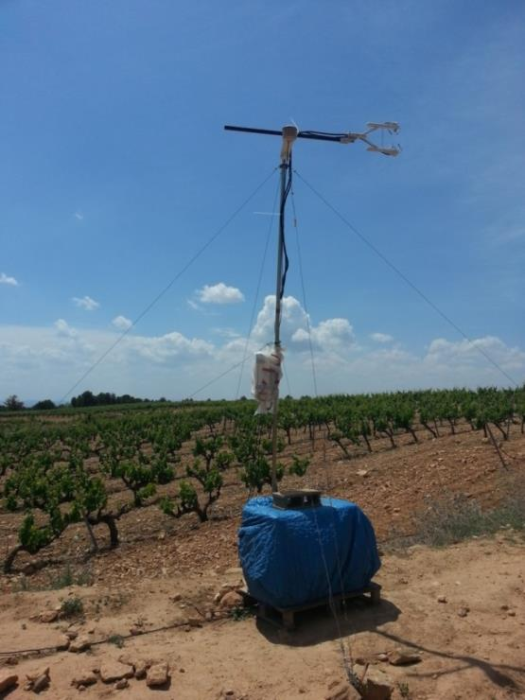
To enhance its capabilities in carbon and water flux measurement over agricultural systems, VAS upgraded its infrastructure in 2013 with the installation of a Campbell Scientific IRGASON™ open-path eddy-covariance (EC) system. This addition enabled continuous, high-precision measurement of CO₂, water vapor, and surface energy fluxes over a vineyard ecosystem.
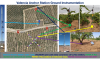
Today, the 1 km by 1 km experimental vineyard is robustly instrumented with fixed and mobile systems, providing a comprehensive ground-truthing platform for satellite missions and advanced modeling research.
The Challenge
VAS supports validation activities for multiple international satellite missions, including:
- NASA CERES
- EUMETSAT/ESA GERB
- ESA/JAXA EarthCARE
- ESA SMOS
- NASA SMAP
- Copernicus Sentinel-3
- EUMETSAT MetOp
- GNSS-Reflectometry Missions
To validate these systems, researchers must accurately measure surface radiation components, soil moisture, fraction of absorbed photosynthetically active radiation (FAPAR), leaf area index (LAI), leaf chlorophyll and nitrogen content, and CO₂ and water vapor fluxes.
The site’s primary land cover—vineyards with almond and olive trees—requires precise micrometeorological measurements to ensure representative flux data across the landscape.
Key technical challenges included:
- Ensuring adequate fetch and representativeness
- Minimizing flow distortion around turbulence sensors
- Integrating EC measurements with radiation and soil data
- Supporting both operational monitoring and advanced research
The Solution
VAS installed a Campbell Scientific IRGASON open-path EC system to measure the following: CO₂ flux, water vapor flux, sensible heat, latent heat (evapotranspiration), and surface energy balance components.
System installation followed Campbell Scientific’s guidance on minimizing flow distortion by orienting turbulence sensors into the prevailing wind direction. Wind rose analysis confirmed dominant western winds, and the EC system was aligned accordingly.
This comprehensive instrumentation created a complete vineyard-scale surface atmosphere exchange observatory.
Implementation
The IRGASON system was deployed within a fully instrumented 1 km² vineyard parcel. The site includes:
- Central flux tower with EC system
- Multiple FAPAR flux stations
- Radiation sensors
- Soil measurement stations
- Mobile instrumentation for field campaigns
The installation also served as a hands-on training platform. Advanced undergraduate physics students participated in the deployment and initial data collection, producing high-quality research theses based on real-world micrometeorological measurements.
Results
Improved Carbon and Water Flux Understanding
Continuous EC measurements revealed:
- Increasing summer water vapor flux as the vine canopy developed
- Increasing CO₂ sequestration during the peak growing season
- Detailed weekly surface energy balance dynamics
Energy balance analysis showed a strong correspondence between radiation inputs and turbulent fluxes, enabling full characterization of evapotranspiration and vineyard carbon uptake.
Machine Learning Integration
The high-quality EC dataset enabled pioneering machine learning (ML) research:
- Nine ML models were evaluated to predict sensible heat, evapotranspiration, and CO₂ fluxes.
- Radiative components were identified as the most critical predictive variables.
- Models successfully simulated EC fluxes using only conventional meteorological inputs.
This work extended beyond the vineyard site to a European-scale study using Integrated Carbon Observation System (ICOS) data from 28 stations, demonstrating the ability to forecast atmospheric CO₂ concentrations one year in advance using hybrid ML and deep learning models.
Benefits
- High-Accuracy Ground Truth for Satellite Validation: The IRGASON EC system provides continuous, research-grade flux measurements that strengthen validation of multiple international satellite missions.
- Representative Vineyard-Scale Measurements: Optimized mast height and prevailing wind alignment ensure reliable flux representativeness across the 1 km² vineyard area.
- Integrated Energy Balance Monitoring: Simultaneous radiation, soil, and turbulent flux measurements enable complete surface energy balance assessment.
- Scalable Data for Advanced Modeling: High-frequency EC data support ML, deep learning, and forecasting applications at both local and continental scales.
- Long-Term Research Infrastructure: Since 2013, the EC system has delivered stable, continuous measurements that underpin peer-reviewed research and international collaborations.
- Education and Workforce Development: The system provides hands-on experience for physics and environmental science students, demonstrating that high-performance research instrumentation can operate effectively in academic training environments.
Why Campbell Scientific?
Campbell Scientific instrumentation provides:
- Integrated EC measurement capability
- Proven turbulence measurement accuracy
- Robust field durability
- Configurable data-acquisition systems
- Alignment with best-practice EC deployment standards
By combining precision sensors with field-ready design, Campbell Scientific enabled VAS to expand from a satellite validation site to an advanced carbon flux and ML research hub.
Conclusion
The installation of the Campbell Scientific IRGASON EC system significantly enhanced VAS’s scientific capability. The system delivers reliable, high-quality flux measurements that support satellite validation, vineyard carbon monitoring, and cutting-edge ML research.
Today, VAS stands as a model of how integrated ground-based instrumentation strengthens EO science, linking field measurements, satellite data, and predictive analytics into a unified research platform.
Resumen de casos de estudio
Aplicaciones
Carbon and water flux measurement over agricultural systemsUbicación
Valencia, SpainProductos utilizados
IRGASONOrganizaciones participantes
University of ValenciaParámetros medidos
CO2 flux, water vapor flux, sensible heat, latent heat (evapotranspiration)View the PDF